Currently accepting new patients
Address

‍
2007 Medical Pkwy, Suite B
San Marcos, TX 78666
Get Directions

Office hours

Mon - Friday: 8AM – 5PM
Weekends:
Closed

Phone

Phone: (512) 298-1645

Fax: (512) 298-1795

Accepted insurance

- Aetna
- Blue Cross/Blue Shield (BCBS)
- Champ VA
- Cigna
- CMS
- Connected Senior Care Alliance
- Friday
- GEHA
- Humana
- Medicare
- Multiplan
- Oscar
- Railroad Medicare
- Smarthealth
- Tricare
- Triwest
- United Healthcare
- WellMed
- Worker's Compensation
- Private Pay

What Is DRG Stimulation and How Does It Work?

Dorsal root ganglion stimulation is a targeted form of pain management that uses electrical impulses to interfere with pain signals before they reach the brain. The dorsal root ganglion is a cluster of densely populated sensory nerves located just outside the spinal cord, where nerve fibers from specific regions of the body converge before entering the spine. By placing small electrodes near these nerve clusters, DRG stimulation therapy disrupts the electrical signals transmitting pain signals along those nerves, which can lead to a significant reduction in perceived pain in the affected area.

The dorsal root ganglion's anatomy makes it particularly well-suited for this kind of neuromodulation. Because each dorsal root ganglion corresponds to a defined region of the body, a small device positioned at the right level of the spine can address pain in very specific areas, such as the knee, foot, groin, or lower body, without broadly affecting the nervous system the way some other pain management techniques do.

DRG stimulation is a two-part process. A minimally invasive trial procedure is performed first, allowing the patient to experience the therapy before any permanent implantation takes place. If the trial demonstrates meaningful benefit, a permanent implant is then placed. Both stages of the procedure use imaging guidance, local numbing medication, and mild sedation to help keep patients comfortable throughout.

Person holding ankle in pain while seated on gym floor wearing sneakers

What Conditions Does Dorsal Root Ganglion Stimulation Treat?

DRG stimulation is designed to treat nerve-related pain that is focal, meaning it is concentrated in a specific part of the body rather than diffuse. Common indications include chronic knee pain, ankle pain, groin pain, pelvic floor discomfort, and lower abdominal pain. It is also frequently used for residual or persistent pain following surgeries such as hernia repair, knee replacement, or foot and ankle procedures, as well as pain resulting from trauma to those areas.

Among the conditions that may respond well to dorsal root ganglion stimulation are:

For chronic pain sufferers who have not found adequate relief through pain medications or repeated injection therapy, DRG stimulation may offer a longer-term alternative worth discussing with a pain specialist.

Am I a Candidate for DRG Therapy?

Candidacy for DRG therapy depends on the nature and location of a patient's pain, their prior treatment history, and an evaluation by a pain specialist. In general, patients who tend to be good candidates are those experiencing well-localized chronic pain, particularly neuropathic pain or pain following surgery or injury, who have not achieved satisfactory relief through more conservative approaches. Because DRG stimulation precisely targets specific nerve clusters along the spine, it tends to be most effective when pain can be mapped to a defined region of the lower body.

Patients who may not be candidates include those with active infections, certain anatomical considerations that affect implant placement, or medical conditions that make undergoing a procedure inadvisable. The initial evaluation at our San Marcos office gives the care team an opportunity to review your full history and determine whether this treatment is appropriate for you.

Regarding risks: like any medical procedure, DRG stimulation carries a small chance of bleeding or infection at the implant site. Imaging guidance is used during both the trial and permanent implantation stages to minimize these potential risks. The overall risk profile for this procedure is considered low, and multiple precautions are taken to support patient safety and well-being throughout the entire process. Your care team will also discuss whether coordination with physical therapy or other modalities may support your overall quality of care.

Woman holding her ankle on a gym floor near a sneaker

What to Expect from DRG Stimulation: Pain Relief and Daily Activities

Most patients who proceed to the permanent implant after a successful trial period experience long-term, consistent pain relief without the need for recurring injection appointments or ongoing adjustments in pain medications. The stimulation itself is generally not felt as a sensation; patients typically notice the therapy through a reduced level of pain rather than any perceptible buzzing or tingling, which is a meaningful distinction from some other forms of neuromodulation.

The goal of DRG stimulation is to help patients regain control over their daily activities, reduce their reliance on other pain management techniques, and improve their overall quality of life. While individual outcomes vary and no result can be guaranteed, the therapy is designed to provide significant relief that is both constant and durable over time. Regular follow-up appointments with the care team help ensure optimal pain relief is maintained and that the device continues to function as intended.

The battery powering the implanted device may need to be replaced with a minor procedure approximately seven to ten years after the initial implant, which can allow the device to remain in service for many years. Patients undergoing DRG stimulation in the San Marcos, TX area can expect consistent support from GAPC's team throughout the life of the device.

Smiling older man tending roses in a sunny garden wearing a straw hat

The Dorsal Root Ganglion Stimulation Treatment Process

1

Schedule an Appointment

Contact our San Marcos clinic directly or use the online appointment form to get started. A member of our dedicated team will reach out to confirm your appointment and answer any initial questions about what to expect.

2

Initial Evaluation

During your first visit, one of our pain specialists will take a thorough history of your chronic pain, the specific areas of your body affected, and any prior treatments you have tried. This evaluation helps the team determine whether you are a good candidate for DRG stimulation therapy and what level of the spine may be most relevant for your situation.

3

Trial Period

If you are considered a suitable candidate, you will undergo a minimally invasive trial procedure that places temporary leads near the appropriate dorsal root ganglion. The trial period typically lasts one week, during which you carry a small external battery and track your pain levels. This stage allows both the patient and the care team to assess whether the therapy is providing meaningful benefit before committing to permanent implantation.

4

Permanent Implantation

If the trial period shows a significant reduction in pain, you will be scheduled for permanent implantation of the device. The permanent implant procedure takes approximately 60 to 90 minutes and is performed with imaging guidance, local anesthetic, and mild sedation. Once implanted, the device can remain in place for as long as it continues to provide relief, with the option to replace the battery as needed years down the line.

Testimonials

5 gold stars

"Dr. Jarzembeck is AMAZING. I HIGHLY recommend her for anyone suffering in pain. She goes above and beyond to make sure her patients pain has been dealt with."

Genia G.
5 gold stars

"Everyone is so friendly and helpful, Dr. Bednar came to me and explained the procedure and answered my questions. Highly recommend!"

Maggie G.
5 gold stars

"Dr. Julia is the best! The staff is professional and friendly to all. Best of all, Dr. Julia is finding solutions for my chronic pain! Never thought that it would be possible. It's a journey for me, but it seems like there is a solution."

Nancy M.

Frequently Asked Questions

Is dorsal root ganglion stimulation covered by insurance?

arrow icon

DRG stimulation is covered by many insurance plans. Our office will work with you and your insurer to determine your specific coverage and help clarify what to expect before you move forward with the procedure.

How does DRG stimulation compare to other pain management techniques like spinal cord stimulation?

arrow icon

Both DRG stimulation and spinal cord stimulation use electrical impulses delivered near the spinal cord to reduce pain signals reaching the brain, and both are forms of neuromodulation. The key difference is precision: DRG stimulation targets the dorsal root ganglion at a specific spinal level, which allows it to address focal or localized pain in defined areas of the body, such as the knee, foot, or groin, more precisely than spinal cord stimulation typically can. Among the several advantages of DRG therapy is its ability to address pain in areas that can be difficult to reach effectively with conventional spinal cord stimulation. Your pain specialist can help determine which approach may be better suited to your pattern of pain.

What chronic pain conditions can DRG stimulation therapy help manage?

arrow icon

DRG stimulation therapy can help manage a range of chronic pain conditions involving localized neuropathic pain, including complex regional pain syndrome, peripheral neuropathy, post-surgical nerve pain, and pain following trauma to the knee, foot, ankle, or groin. It is particularly well-suited for chronic pain sufferers whose symptoms are concentrated in a specific area of the lower body rather than spread across a broad region.

How long do the benefits of DRG stimulation last?

arrow icon

The benefits of DRG stimulation are designed to be long-term. As long as the device remains on and functioning, patients typically experience consistent pain relief. The device battery may need to be replaced with a minor procedure roughly seven to ten years after the initial implant, allowing the therapy to continue for many years. Regular follow-up appointments with your care team help ensure the device continues to deliver optimal pain relief over time.

How long does the DRG stimulation procedure take?

arrow icon

The trial procedure generally takes between 30 and 60 minutes, after which the patient wears a small external battery for approximately one week. If the trial is successful and the patient proceeds to permanent implantation, that procedure typically takes 60 to 90 minutes. Both stages are performed with imaging guidance and mild sedation at our San Marcos, TX facility.

What are the potential risks of dorsal root ganglion stimulation?

arrow icon

The potential risks associated with DRG stimulation are generally low. As with any medical procedure, there is a small possibility of bleeding or infection at the implant site. Imaging guidance is used during both the trial and permanent implant stages to help minimize these risks. Your pain specialist will review all potential risks with you during your evaluation so you can make an informed decision about your care.

Lunch & Learn With Our Doctors

Curious about interventional pain treatments in Austin, TX? Join our doctors for an in-person lunch and learn session to find out more about these treatments and ask any questions you may have. This event will be 12–1pm, sign up below to receive more details and RSVP.

Loading security check...

Thank you! Your submission has been received!
Oops! Something went wrong while submitting the form.

Find DRG Stimulation Pain Management Near San Marcos, TX

If chronic nerve pain is limiting your daily activities and you would like to learn whether dorsal root ganglion stimulation may be appropriate for your situation, the team at Greater Austin Pain Center is ready to help. Call us at (512) 298-1645 or request an appointment online. With offices in Austin, Kyle, Dripping Springs, and San Marcos, our Texas pain specialists are here to support patients across Central Texas.

Schedule an Appointment

Relieve Your Pain Today!
Disclaimer: Using this form does not establish a patient-physician relationship. This form is not to be used for emergencies or urgent requests. Please call 911 if you have a life-threatening emergency.
By submitting this form you agree to the collection of your personal data pursuant to our privacy policy.

Loading security check...

Green padlock icon
All Information Is Secure and Confidential
Thank you! Your submission has been received!
Oops! Something went wrong while submitting the form.
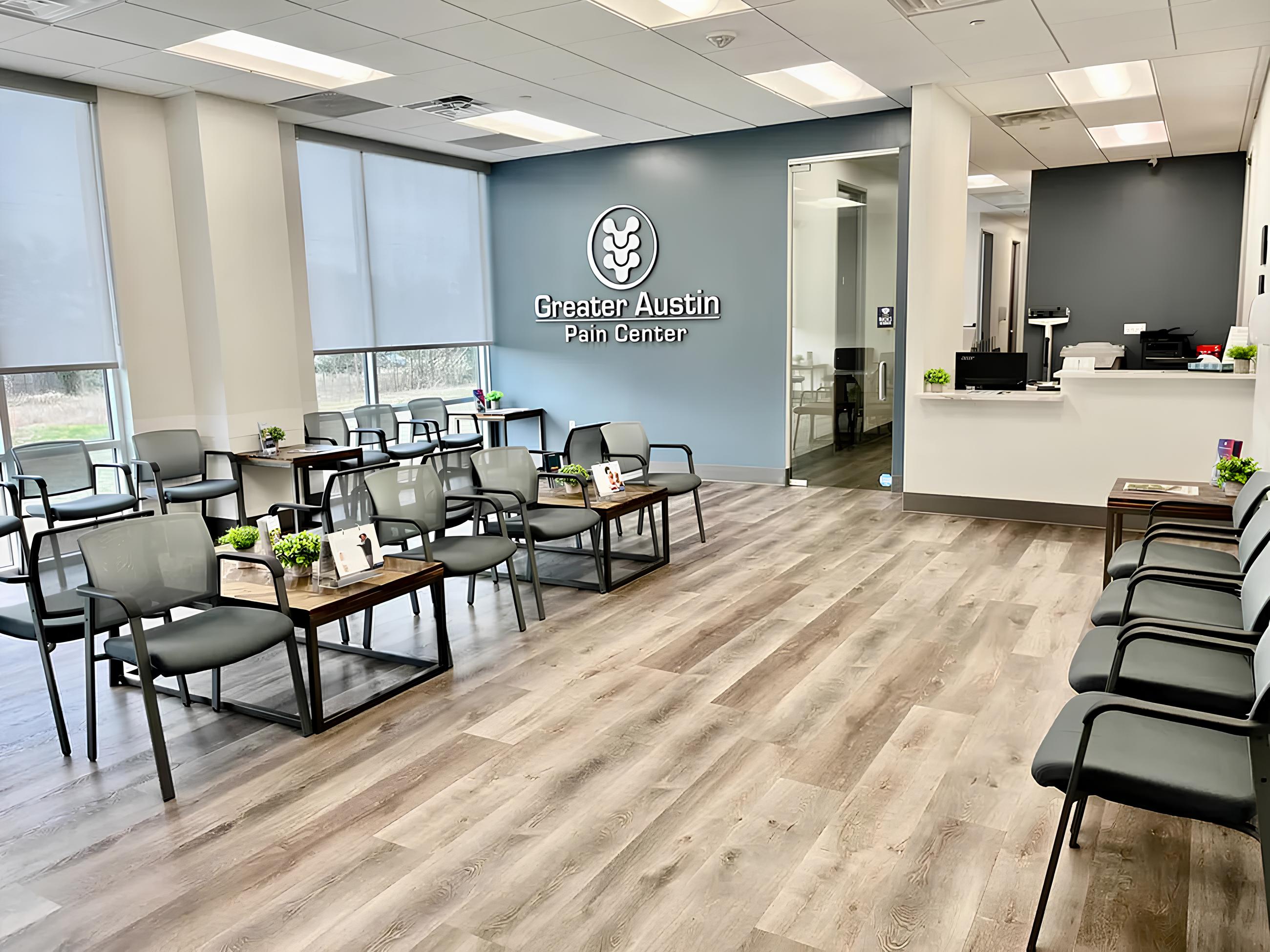
A modern medical office waiting room with gray chairs, small tables with plants and brochures, wood-style flooring, and a reception desk. The wall displays the sign "Greater Austin Pain Center."

Greater Austin Pain Center Is Hiring! Apply Online Today