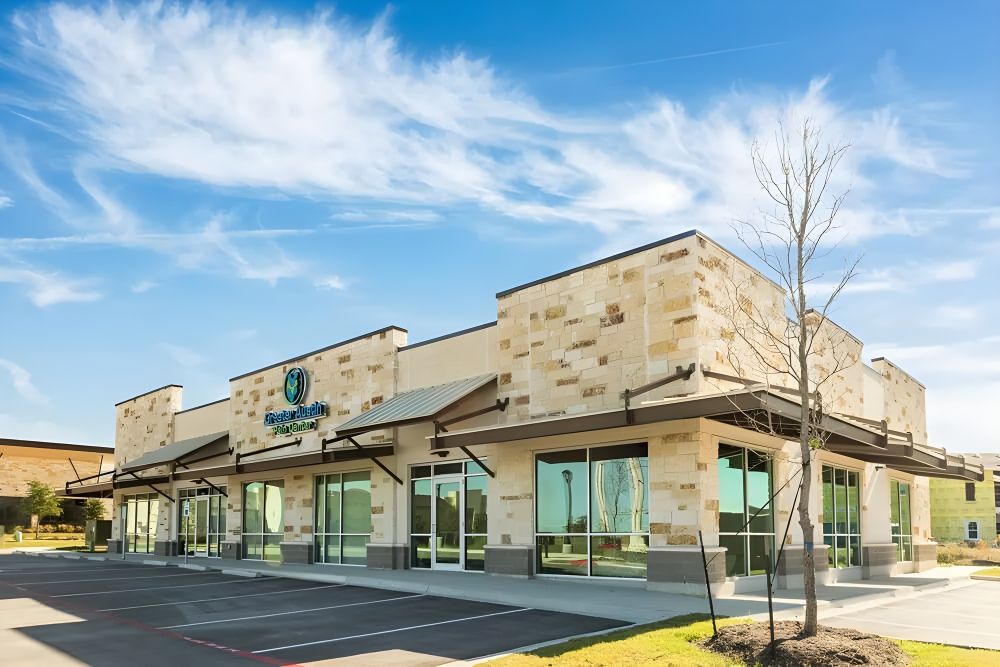
Currently accepting new patients
Address

5920 W. William Cannon Dr. Building 6, Suite 150
Austin, TX 78749
Get Directions

Office hours

Mon: 8AM – 5PM
Tues: 8AM – 5PM
Wed: 8AM – 5PM
Thur: 8AM – 5PM
Fri: 8AM – 5PM
Weekends: Closed

Phone

Phone: (512) 298-1645

Fax: (512) 298-1795

Accepted insurance

- Aetna
- Blue Cross/Blue Shield (BCBS)
- Champ VA
- Cigna
- CMS
- Connected Senior Care Alliance
- Friday
- GEHA
- Humana
- Medicare
- Multiplan
- Oscar
- Railroad Medicare
- Smarthealth
- Tricare
- Triwest
- United Healthcare
- WellMed
- Worker's Compensation
- Private Pay

What Is a Stellate Ganglion Block and How Does It Work?

The stellate ganglion is a bundle of sympathetic nerves located near the lower cervical vertebrae on either side of the voice box.

These nerve fibers are part of the sympathetic nervous system, which helps control involuntary functions such as blood pressure, sweating, circulation, and the body's fight-or-flight response.

A stellate ganglion block, or SGB, involves injecting a local anesthetic near this group of sympathetic nerves. Temporarily reducing sympathetic nerve activity can interrupt certain pain signals and may improve blood flow to the head, neck, upper chest, and arms.

For some patients, SGB treatment can both provide relief and help determine whether the sympathetic nervous system is involved in their pain symptoms.

What Does a Stellate Ganglion Block Treat?

A stellate ganglion block is most often used for pain conditions involving abnormal sympathetic nerve activity in the upper body.

Conditions may include:

Complex regional pain syndrome can cause severe pain, swelling, sweating, temperature changes, or changes in skin color. By targeting the sympathetic ganglia, the injection may help reduce pain and calm the abnormal nerve response contributing to these symptoms.

What to Expect From SGB Treatment

A stellate ganglion block is typically performed as a minimally invasive outpatient procedure. Before the injection, the skin on the side of the neck is cleaned and numb with local anesthetic or another numbing medication.

Your doctor then uses imaging guidance, such as X-ray or ultrasound, to help position the needle near the stellate ganglion while avoiding nearby nerves and other structures. Once the needle is in position, the anesthetic is carefully injected around the target area.

The SGB procedure itself generally takes only a few minutes to complete, although additional time is needed for preparation and observation afterward.

Some patients notice a change in warmth or blood flow in the affected arm following a successful block.

Side Effects of Stellate Ganglion Blocks

Temporary effects can occur because the stellate ganglion sits close to several important nerves and structures in the neck.

Common temporary side effects may include:

  • Drooping of one eyelid
  • Nasal congestion
  • Hoarseness or changes in the voice
  • Warmth or numbness in the arm
  • Soreness at the injection site
  • Temporary difficulty swallowing

More serious risks, although uncommon, can include bleeding, infection, nerve injury, or unintended medication placement.

Using imaging guidance helps your doctor place the injection accurately and reduce procedural risk. Your health history, medications, and individual risk factors will be reviewed before treatment.

Woman at elevators in front of San Antonio Eye Specialists sign.

The Stellate Ganglion Block Process

1

Schedule an Appointment

Contact Greater Austin Pain Center to schedule an appointment and discuss the symptoms you are experiencing, previous treatment, and whether an SGB may be helpful.

2

Initial Evaluation

Your doctor will review where the pain occurs, how it behaves, and whether changes in sweating, skin temperature, circulation, or other symptoms suggest that sympathetic nerves may be involved.

3

Treatment

After numbing the skin, your doctor uses imaging guidance to place the needle beside the stellate ganglion and inject the local anesthetic around the targeted nerves.

4

Recovery

Patients remain under observation briefly after the injection. Your doctor will evaluate your response to the block and discuss whether additional SGB treatment may provide further pain relief.

Testimonials

5 gold stars

"Dr. Jarzembeck is AMAZING. I HIGHLY recommend her for anyone suffering in pain. She goes above and beyond to make sure her patients pain has been dealt with."

Genia G.
5 gold stars

"Everyone is so friendly and helpful, Dr. Bednar came to me and explained the procedure and answered my questions. Highly recommend!"

Maggie G.
5 gold stars

"Dr. Julia is the best! The staff is professional and friendly to all. Best of all, Dr. Julia is finding solutions for my chronic pain! Never thought that it would be possible. It's a journey for me, but it seems like there is a solution."

Nancy M.

Frequently Asked Questions

Can a stellate ganglion block help PTSD symptoms?

arrow icon

Stellate ganglion block treatment has been studied as a possible way to alleviate certain symptoms associated with post traumatic stress disorder, including anxiety, sleep problems, heightened stress, and an overactive fight or flight response.

However, evidence for using SGB to treat PTSD is still developing and results have been mixed. A stellate ganglion block does not directly treat the emotional trauma responsible for PTSD and should not replace care from a qualified behavioral health professional.

Patients suffering from PTSD symptoms, depression, anxiety, or panic attacks should discuss treatment with the appropriate mental health provider. If SGB is being considered as additional support, the potential benefits and limitations should be reviewed with a qualified physician.

How long does relief from a stellate ganglion block last?

arrow icon

The response to an SGB varies from person to person. Some patients experience relief quickly after the injection, while the duration of improvement depends on the underlying condition and individual response.

Many patients who experience meaningful benefits may receive more than one block. Your doctor can determine whether repeating the procedure makes sense based on how your symptoms respond.

Can stellate ganglion blocks be used for conditions other than pain?

arrow icon

The stellate ganglion has been studied for several conditions related to sympathetic nervous system activity, including severe hot flashes, PTSD symptoms, and symptoms associated with long COVID.

These applications are different from the pain management uses of stellate ganglion blocks offered by Greater Austin Pain Center. Patients interested in SGB for another condition should discuss the available evidence and appropriate treatment options with a physician familiar with that specific condition.

Lunch & Learn With Our Doctors

Curious about interventional pain treatments in Austin, TX? Join our doctors for an in-person lunch and learn session to find out more about these treatments and ask any questions you may have. This event will be 12–1pm, sign up below to receive more details and RSVP.

Loading security check...

Thank you! Your submission has been received!
Oops! Something went wrong while submitting the form.

Treat Sympathetic Nerve Pain With Stellate Ganglion Blocks in Austin

Pain involving the sympathetic nervous system can affect much more than comfort. Changes in circulation, sweating, sensitivity, and nerve signaling can make everyday life more difficult for patients suffering from complex regional pain syndrome and other chronic pain conditions.Greater Austin Pain Center provides personalized pain management to determine whether a stellate ganglion block may help relieve your symptoms.

Schedule a consultation at out at our Austin, Kyle, Dripping Springs, or San Marcos location to learn more about SGB treatment.

Schedule an Appointment

Relieve Your Pain Today!
Disclaimer: Using this form does not establish a patient-physician relationship. This form is not to be used for emergencies or urgent requests. Please call 911 if you have a life-threatening emergency.
By submitting this form you agree to the collection of your personal data pursuant to our privacy policy.

Loading security check...

Green padlock icon
All Information Is Secure and Confidential
Thank you! Your submission has been received!
Oops! Something went wrong while submitting the form.
A modern medical office waiting room with gray chairs, small tables with plants and brochures, wood-style flooring, and a reception desk. The wall displays the sign "Greater Austin Pain Center."

Greater Austin Pain Center Is Hiring! Apply Online Today