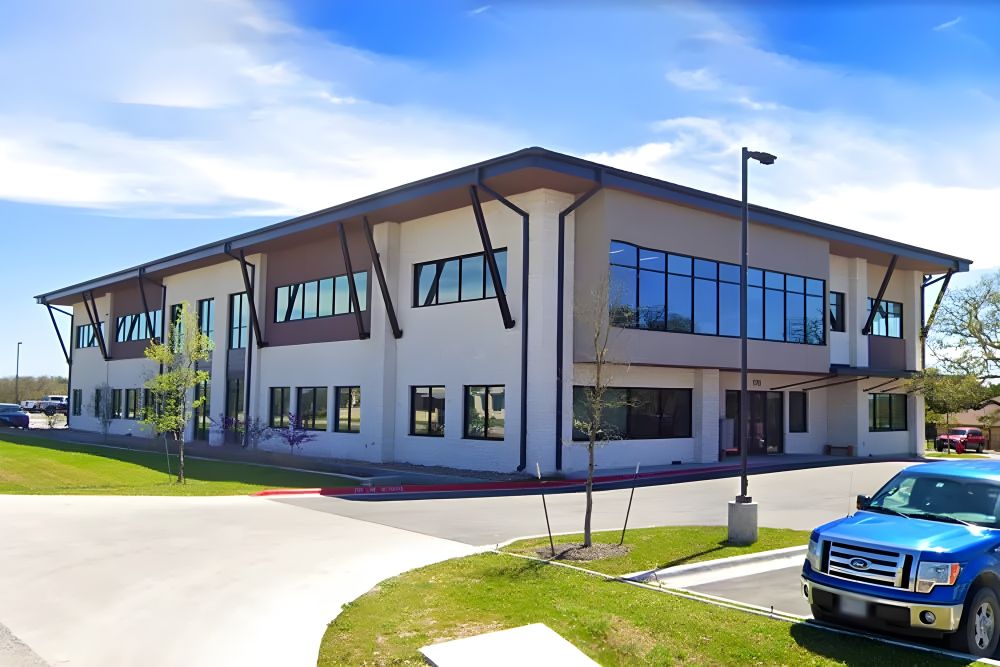
Currently accepting new patients
Address

‍
2007 Medical Pkwy, Suite B
San Marcos, TX 78666
Get Directions

Office hours

Mon - Friday: 8AM – 5PM
Weekends:
Closed

Phone

Phone: (512) 298-1645

Fax: (512) 298-1795

Accepted insurance

- Aetna
- Blue Cross/Blue Shield (BCBS)
- Champ VA
- Cigna
- CMS
- Connected Senior Care Alliance
- Friday
- GEHA
- Humana
- Medicare
- Multiplan
- Oscar
- Railroad Medicare
- Smarthealth
- Tricare
- Triwest
- United Healthcare
- WellMed
- Worker's Compensation
- Private Pay

What Is Degenerative Disc Disease?

Degenerative disc disease is a term used to describe the natural breakdown of spinal discs that occurs as the spine ages. The intervertebral discs act as shock absorbers between the vertebrae, helping the spine stay flexible so you can bend, twist, and move comfortably. When those discs begin to deteriorate, the spine loses some of its ability to distribute stress evenly across each vertebral segment.

Degenerative disc disease generally occurs in the cervical spine or the lumbar spine, though it can develop anywhere along the spinal column. As a disc breaks down, the outer ring of the disc, called the annulus fibrosus, can become worn and less able to contain the inner disc material, known as the nucleus pulposus. When the nucleus pulposus pushes outward, inflammation can develop as proteins in the disc space irritate the surrounding nerves. Over time, these structural changes can lead to significant discomfort and reduced function.

Woman at elevators in front of San Antonio Eye Specialists sign.

How Degenerative Disc Disease Affects the Body

Degenerative disc disease can present differently from one person to the next. Some patients experience pain only occasionally, while others experience pain that is severe and persistent. Common symptoms include localized back pain, neck pain, and discomfort that radiates into the buttocks or upper thighs. When a deteriorating disc irritates nearby nerve roots, patients may also notice numbness, tingling, or weakness extending into the arms and hands or the legs and feet.

In some cases, nerve root compression can lead to muscle weakness or a condition called foot drop, which may indicate damage to the affected disc's neighboring nerve structures. Nerve compression along the spinal canal can also contribute to sciatica, producing shooting pain that travels down one or both legs. Left unmanaged, degenerative disc disease may contribute to additional degenerative conditions over time, including spinal stenosis (narrowing of the spaces within the spine), herniated discs, and adult scoliosis.

  • Nagging or severe pain that comes and goes
  • Pain in the lower back, buttocks, or upper thighs
  • Neck pain or arm pain
  • Pain that worsens with sitting and may improve with movement
  • Numbness and tingling in the extremities
  • Weakness in the legs or arms
A physical therapist in blue scrubs examines a woman's lower back as she sits on an exam table in a clinic, lifting her shirt slightly to expose the area.

Non-Surgical Treatments for Degenerative Disc Disease in San Marcos

Many patients with degenerative disc disease are able to manage their symptoms effectively without surgery. At Greater Austin Pain Center, our approach to degenerative disc disease in San Marcos focuses on non-surgical treatments designed to relieve pressure on affected disc and nerve structures, reduce inflammation, and help patients restore mobility and return to an active lifestyle.

Treatment plans are individualized based on each patient's symptoms, imaging findings, and specific needs. Non surgical treatments that our specialists may consider include:

Anti-inflammatory medications such as NSAIDs or corticosteroids may also be recommended as part of a broader treatment plan to help manage symptoms. When appropriate, your care team may refer you to physical therapy to work on core strengthening and address improper posture or poor body mechanics that may be contributing to your pain. Coordination with physical therapy or rehabilitation does not mean surgery is the next step; for many patients, a well-structured non surgical treatment plan provides meaningful, lasting relief.

For patients whose degenerative conditions have progressed significantly, the team will discuss whether additional interventions such as spinal fusion or other procedures may be appropriate, and refer accordingly when those options fall outside interventional pain management.

Woman at elevators in front of San Antonio Eye Specialists sign.

Getting Care for Degenerative Disc Disease at Greater Austin Pain Center

1

Step 1: Schedule an Appointment

The first step is contacting Greater Austin Pain Center to schedule a consultation at our San Marcos clinic. New patients are welcome, and our team will help gather insurance and health history information before your visit. Early evaluation is especially useful for patients who have been experiencing chronic pain or worsening symptoms over time.

2

Step 2: Evaluation and Diagnosis

At your appointment, your doctor will conduct a thorough physical examination, review your symptoms, and assess your medical and family history. Imaging studies such as x rays or an MRI may be ordered to identify the location and severity of disc degeneration, nerve root compression, or related structural changes. This information forms the foundation of an accurate diagnosis.

3

Step 3: Personalized Treatment Plan

Based on your diagnosis and specific needs, your care team will develop a treatment plan tailored to your condition. This may include one or more non surgical treatments such as epidural injections, indirect spinal decompression, or disc injections, along with recommendations for activity modification or referral to physical therapy. Your doctor will walk you through each option so you can make an informed decision about your care.

4

Step 4: Ongoing Care and Follow-Up

Degenerative disc disease is a chronic condition, and ongoing management is often important for maintaining function and quality of life. Your care team will schedule follow-up visits to monitor your response to treatment, adjust the treatment plan as needed, and support your long-term spinal health. The goal is to help you manage pain effectively so it has less impact on your daily life.

Testimonials

5 gold stars

"Dr. Jarzembeck is AMAZING. I HIGHLY recommend her for anyone suffering in pain. She goes above and beyond to make sure her patients pain has been dealt with."

Genia G.
5 gold stars

"Everyone is so friendly and helpful, Dr. Bednar came to me and explained the procedure and answered my questions. Highly recommend!"

Maggie G.
5 gold stars

"Dr. Julia is the best! The staff is professional and friendly to all. Best of all, Dr. Julia is finding solutions for my chronic pain! Never thought that it would be possible. It's a journey for me, but it seems like there is a solution."

Nancy M.

Frequently Asked Questions

What is Degenerative Disc Disease?

arrow icon

Degenerative disc disease is a term used to describe the gradual breakdown of the spinal discs that sit between the vertebrae. These intervertebral discs act as shock absorbers for the spine, and as they deteriorate with age or injury, they can cause pain, stiffness, and nerve-related symptoms such as numbness or tingling.

How is Degenerative Disc Disease diagnosed?

arrow icon

Diagnosis typically involves a physical examination, a review of your symptoms and medical history, and imaging studies such as x rays or an MRI. These tools help the doctor identify which disc or discs are affected and assess the degree of degeneration and any associated nerve compression.

What are the most common symptoms of Degenerative Disc Disease?

arrow icon

Common symptoms include localized back pain or neck pain, pain that radiates into the buttocks, thighs, or legs, and numbness or tingling in the arms or legs. Some patients also experience muscle weakness. Symptoms can vary significantly from person to person, and some individuals with disc degeneration may have minimal or no symptoms at all.

Is there a cure for Degenerative Disc Disease?

arrow icon

There is no cure for degenerative disc disease. However, a range of non-surgical treatments and management strategies can help reduce pain, restore mobility, and allow many patients to return to a more active lifestyle. Your doctor will work with you to develop a treatment plan suited to the severity of your condition and your goals.

Can you live a normal life with Degenerative Disc Disease?

arrow icon

Yes. Many patients with degenerative disc disease are able to manage their symptoms effectively and maintain a good quality of life. With an appropriate treatment plan, including pain management options available at Greater Austin Pain Center, daily activities and overall function can often be meaningfully improved.

What non-surgical treatment options are available for Degenerative Disc Disease?

arrow icon

Non-surgical treatment options may include epidural injections to reduce inflammation and relieve nerve pressure, indirect spinal decompression procedures, allogeneic disc injections, regenerative medicine approaches, and anti-inflammatory medications. Your care team may also recommend referral to physical therapy as part of a broader treatment plan. The right combination depends on your specific diagnosis and symptoms.

Lunch & Learn With Our Doctors

Curious about interventional pain treatments in Austin, TX? Join our doctors for an in-person lunch and learn session to find out more about these treatments and ask any questions you may have. This event will be 12–1pm, sign up below to receive more details and RSVP.

Loading security check...

Thank you! Your submission has been received!
Oops! Something went wrong while submitting the form.

Find Relief from Degenerative Disc Disease Near San Marcos

If you are experiencing back pain, neck pain, numbness, or other symptoms that may be related to degenerative disc disease, Greater Austin Pain Center is here to help. Call us at (512) 298-1645 or schedule online to connect with our spine specialists in San Marcos. We also serve patients from Austin, Kyle, and Dripping Springs, so quality pain care is never far from home.

Schedule an Appointment

Relieve Your Pain Today!
Disclaimer: Using this form does not establish a patient-physician relationship. This form is not to be used for emergencies or urgent requests. Please call 911 if you have a life-threatening emergency.
By submitting this form you agree to the collection of your personal data pursuant to our privacy policy.

Loading security check...

Green padlock icon
All Information Is Secure and Confidential
Thank you! Your submission has been received!
Oops! Something went wrong while submitting the form.
A modern medical office waiting room with gray chairs, small tables with plants and brochures, wood-style flooring, and a reception desk. The wall displays the sign "Greater Austin Pain Center."

Greater Austin Pain Center Is Hiring! Apply Online Today