Currently accepting new patients
Address

4210 Benner Rd
Kyle, TX 78640
Get Directions

Office hours

Mon - Friday: 8AM – 5PM
Weekends:
Closed

Phone

Phone: (512) 298-1645

Fax: (512) 298-1795

Accepted insurance

- Aetna
- Blue Cross/Blue Shield (BCBS)
- Champ VA
- Cigna
- CMS
- Connected Senior Care Alliance
- Friday
- GEHA
- Humana
- Medicare
- Multiplan
- Oscar
- Railroad Medicare
- Smarthealth
- Tricare
- Triwest
- United Healthcare
- WellMed
- Worker's Compensation
- Private Pay

What Is a Herniated Disc?

The spine is a column of stacked vertebrae that surrounds and protects the spinal cord. Between each pair of vertebrae sit intervertebral discs, structures that are flat and roughly circular, with a gel-like interior and a tough, rubbery outer wall. These spinal discs act as shock absorbers, cushioning the vertebrae during movement, walking, lifting, and other daily activity.

A herniated disc occurs when a tear develops in a disc's outer wall, allowing the soft inner material to push through and press against nearby nerves or the spinal cord itself. This condition is also referred to as a slipped disc or a ruptured disc, and it can develop anywhere along the spinal column, though the lumbar spine and the cervical spine are the most commonly affected regions.

Woman at elevators in front of San Antonio Eye Specialists sign.

How a Herniated Disc Affects the Body: Back Pain, Neck Pain, and More

When disc material presses on a spinal nerve, it can produce a wide range of symptoms depending on the location of the herniation. A lumbar disc herniation, for example, tends to produce lower back pain along with pain that radiates into the buttock, leg, or foot. This pattern of radiating leg pain is frequently associated with sciatica, a condition in which pressure on the sciatic nerve causes sharp, shooting, or burning discomfort along the nerve's path.

When herniation occurs in the cervical spine, patients may experience neck pain, shoulder discomfort, or pain and numbness that travels into the arm and hand. Across both regions, common symptoms include:

  • Back pain or neck pain that may be dull, aching, or sharp
  • Numbness and tingling in the affected leg, foot, arm, or hand
  • Muscle weakness in the limbs served by the compressed spinal nerve
  • A burning or shooting sensation radiating from the lower back into the leg
  • Discomfort that worsens with certain movements or prolonged sitting

In rare and more severe cases, a herniated disc can affect bowel or bladder control, which warrants prompt medical attention. Other symptoms may also develop depending on the degree of nerve compression and the specific disc involved.

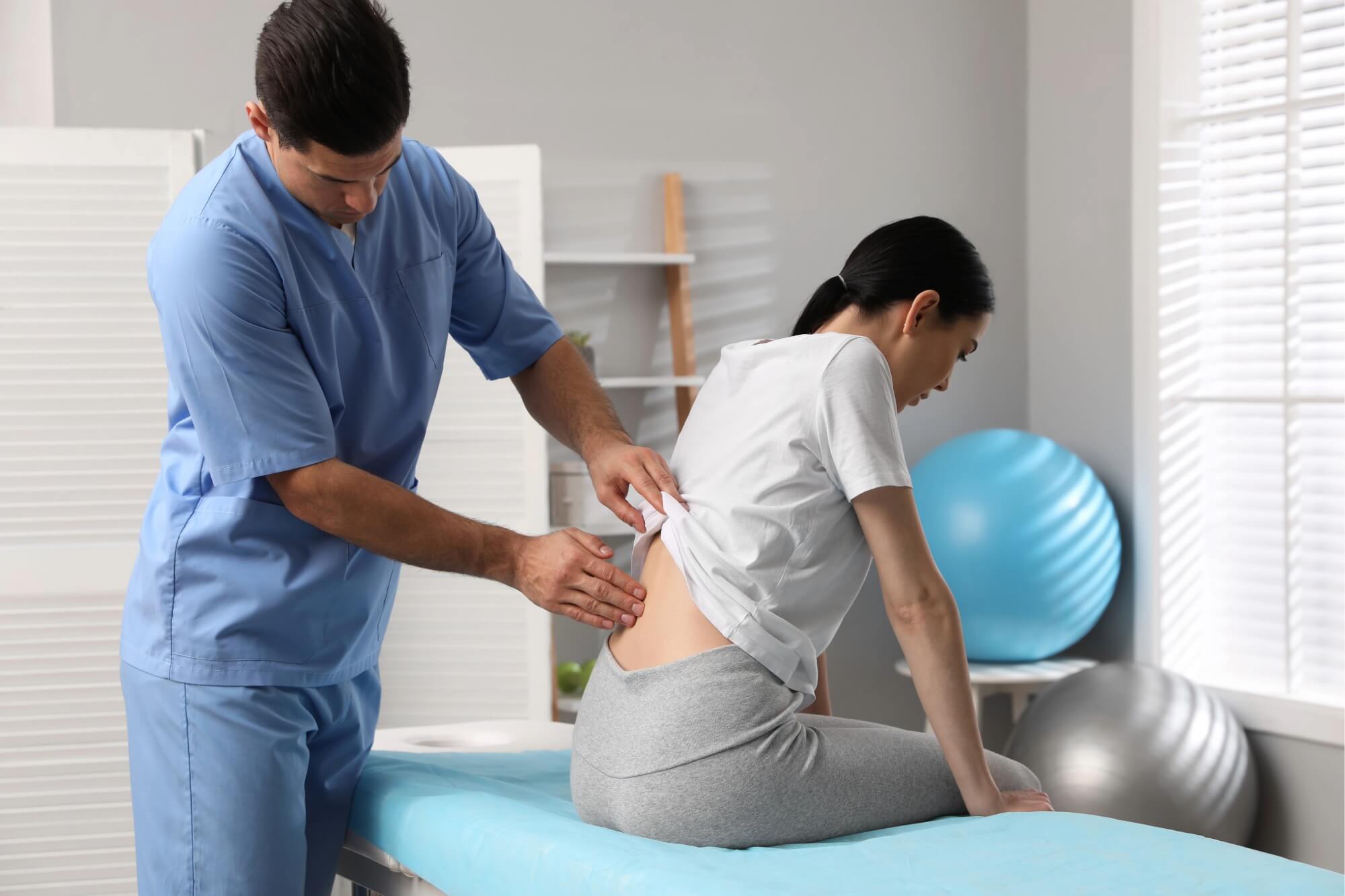
A physical therapist in blue scrubs examines a woman's lower back as she sits on an exam table in a clinic, lifting her shirt slightly to expose the area.

Treatment Options for Herniated Disc in Kyle

Treatment for a herniated disc depends on the severity of the condition, the location of the affected disc, and how symptoms are affecting a patient's daily life. At Greater Austin Pain Center's Kyle clinic, the care team takes a thorough, individualized approach to building a plan that fits each patient's needs and goals.

For many patients, conservative treatments are an effective first line of care. These may include anti-inflammatory medications (NSAIDs) or muscle relaxants to help manage pain and reduce inflammation, as well as a back brace to limit movement and give the disc time to settle. When conservative treatments are appropriate but not fully addressing symptoms, your care team may also recommend physical therapy to work on posture, movement mechanics, and strengthening the muscles that support the spine. Physical therapy is not provided directly by GAPC, but our team can coordinate referrals as part of a comprehensive plan.

When symptoms continue or a more targeted approach is needed, Greater Austin Pain Center offers a range of interventional treatment options, including:

  • Epidural Injections, which deliver corticosteroid medication close to the affected spinal nerve to help reduce inflammation and relieve pain
  • Nerve Blocks, which can interrupt pain signals from specific nerves affected by disc herniation
  • Radiofrequency Ablation, a technique that uses heat energy to reduce nerve-mediated pain signals
  • Indirect Spinal Decompression, which may help relieve pressure on affected spinal nerves
  • Spinal Cord Stimulators, for patients with persistent or chronic pain that has not responded adequately to other treatments

Surgical intervention is not something GAPC performs directly, but for patients whose symptoms are severe and have not responded to non-surgical care, our specialists can discuss appropriate next steps and coordinate with surgical providers as needed. The goal at every stage is to help patients improve mobility, manage discomfort, and get back to the activities that matter to them.

Woman at elevators in front of San Antonio Eye Specialists sign.

Getting Care for Your Herniated Disc at Greater Austin Pain Center

1

Step 1: Schedule an Appointment

The first step is reaching out to schedule a consultation at our Kyle clinic. GAPC is currently accepting new patients, and appointments can be made by phone or online. When you call, our team will gather basic information about your symptoms, how long you have been experiencing them, and what insurance you carry so we can get you matched with the right specialist.

2

Step 2: Evaluation and Diagnosis

Your specialist will conduct a physical exam to assess the location and character of your pain, identify any muscle weakness or numbness, and review which movements or positions aggravate your symptoms. To confirm the diagnosis and determine the extent of disc involvement, your doctor may also order imaging such as X-rays or other studies. These thorough evaluations help distinguish a herniated disc from related conditions like a bulging disc or spinal stenosis and guide the most appropriate course of treatment.

3

Step 3: Personalized Treatment Plan

Based on the findings from your evaluation and diagnosis, your care team will develop a treatment plan tailored to your specific disc, symptom pattern, and lifestyle. Plans may combine conservative treatments with interventional techniques such as epidural injections or nerve blocks, and they evolve as your condition responds. Your doctor will explain each recommended option and discuss what outcomes are realistic for your situation.

4

Step 4: Ongoing Care and Follow-Up

Herniated disc treatment is often a process rather than a single event, especially for patients managing chronic pain or disc degeneration. GAPC's care team will schedule follow-up visits to monitor your recovery, assess how well treatment is working, and make adjustments as needed. If physical therapy or other coordinated care is part of your plan, your team will help ensure those pieces fit together so your overall progress stays on track.

Testimonials

5 gold stars

"Dr. Jarzembeck is AMAZING. I HIGHLY recommend her for anyone suffering in pain. She goes above and beyond to make sure her patients pain has been dealt with."

Genia G.
5 gold stars

"Everyone is so friendly and helpful, Dr. Bednar came to me and explained the procedure and answered my questions. Highly recommend!"

Maggie G.
5 gold stars

"Dr. Julia is the best! The staff is professional and friendly to all. Best of all, Dr. Julia is finding solutions for my chronic pain! Never thought that it would be possible. It's a journey for me, but it seems like there is a solution."

Nancy M.

Frequently Asked Questions

What is the difference between a herniated disc and a bulging disc?

arrow icon

A herniated disc involves a tear in the disc's outer wall through which the inner gel-like material pushes out and presses on nearby nerves. A bulging disc, by contrast, involves the outer layer of the disc pressing outward beyond its normal boundary between the vertebrae without necessarily tearing. Both can cause pain, but they are distinct conditions and may be treated differently depending on symptoms and severity.

Can a herniated disc heal without surgery?

arrow icon

Many patients find meaningful relief from a herniated disc through non-surgical care. Conservative treatments such as anti-inflammatory medications, physical therapy, and interventional options like epidural injections or nerve blocks can help manage pain and reduce inflammation without surgical intervention. Whether surgery becomes necessary depends on the severity of the disc herniation, the degree of nerve compression, and how symptoms respond to non-surgical approaches. A pain specialist can help you understand your options.

Why do I have a herniated disc if I haven't had a serious injury?

arrow icon

Many herniated discs develop gradually through disc degeneration rather than from a single traumatic event. Prolonged sitting, frequent driving, repetitive bending or lifting, poor posture, and the natural aging process can all place cumulative pressure on spinal discs over time, eventually causing a tear without any memorable injury. This is especially common in the lumbar spine.

What does lower back pain from a herniated disc feel like?

arrow icon

Lower back pain from a lumbar disc herniation can range from a dull, persistent ache to sharp or burning pain that radiates into the buttock, leg, or foot. Many patients also experience numbness, tingling, or weakness in the leg or foot on the affected side. When the sciatic nerve is involved, this pattern of radiating pain is often referred to as sciatica. Symptoms can worsen with sitting, bending, or other movements that increase pressure on the disc.

How is a herniated disc diagnosed?

arrow icon

Diagnosis typically begins with a physical exam during which your doctor evaluates the location of your pain, tests for muscle weakness or numbness, and identifies movements that reproduce your symptoms. Your doctor may also order imaging studies such as X-rays to assess the structure of the spine and other imaging to visualize the discs and any nerve compression. A thorough evaluation helps confirm the diagnosis and guides the most appropriate treatment plan.

When should I seek medical attention for herniated disc symptoms?

arrow icon

You should seek medical attention if you are experiencing persistent back and neck pain, numbness, tingling, or weakness that does not improve on its own, or if pain is severe enough to interfere with daily activities. Symptoms that affect bowel or bladder function require prompt attention. Even if symptoms seem manageable, getting evaluated early can help prevent the condition from worsening and open the door to effective, non-surgical treatment options.

Lunch & Learn With Our Doctors

Curious about interventional pain treatments in Austin, TX? Join our doctors for an in-person lunch and learn session to find out more about these treatments and ask any questions you may have. This event will be 12–1pm, sign up below to receive more details and RSVP.

Loading security check...

Thank you! Your submission has been received!
Oops! Something went wrong while submitting the form.

Find Herniated Disc Care Near Kyle at Greater Austin Pain Center

If back pain, neck pain, or other herniated disc symptoms are affecting your quality of life, the team at Greater Austin Pain Center is here to help. Call us at (512) 298-1645 or schedule online to connect with a specialist at our Kyle clinic. In addition to Kyle, GAPC serves patients throughout Central Texas, with locations in Austin, San Marcos, and Dripping Springs.

Schedule an Appointment

Relieve Your Pain Today!
Disclaimer: Using this form does not establish a patient-physician relationship. This form is not to be used for emergencies or urgent requests. Please call 911 if you have a life-threatening emergency.
By submitting this form you agree to the collection of your personal data pursuant to our privacy policy.

Loading security check...

Green padlock icon
All Information Is Secure and Confidential
Thank you! Your submission has been received!
Oops! Something went wrong while submitting the form.
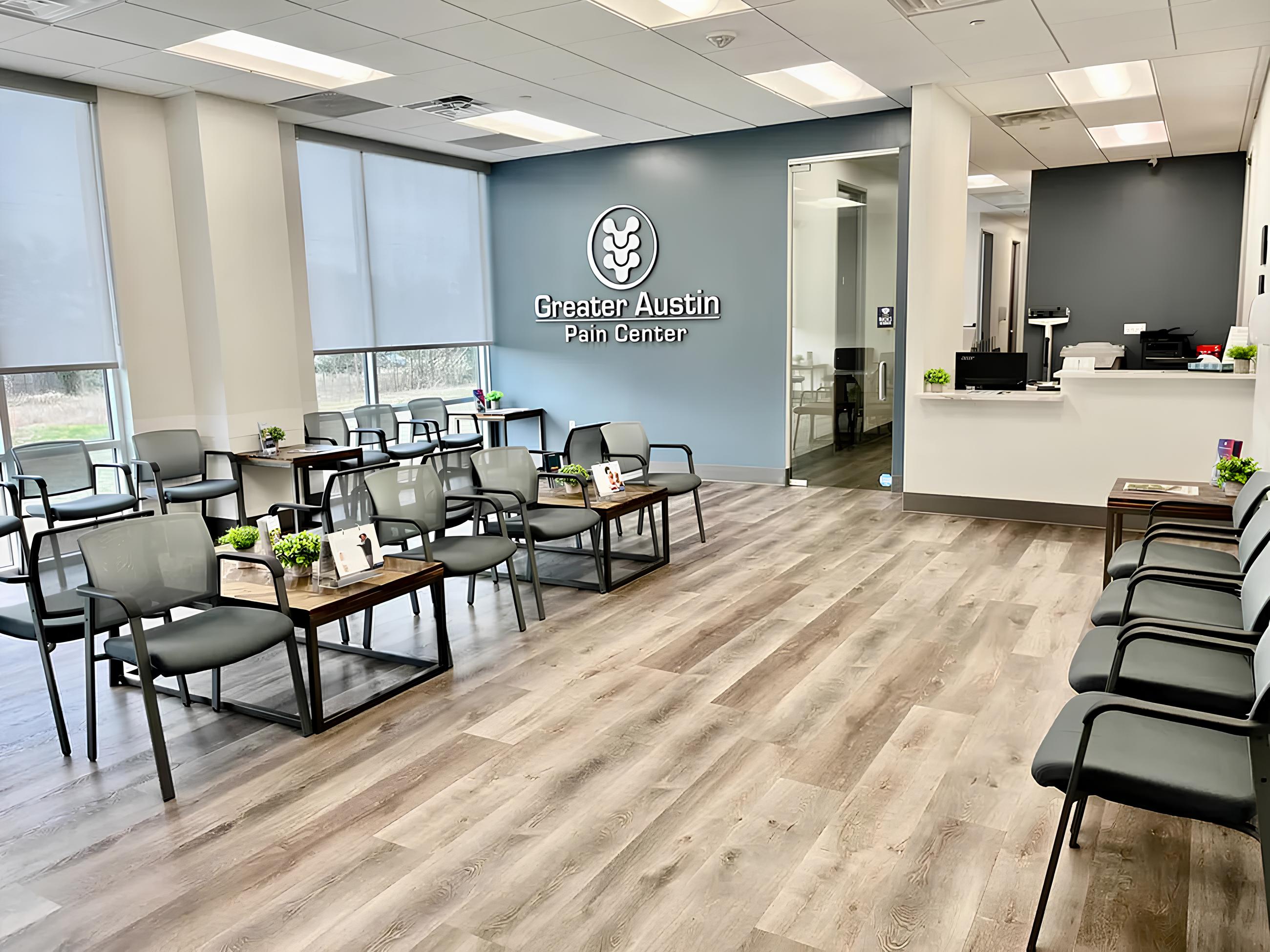
A modern medical office waiting room with gray chairs, small tables with plants and brochures, wood-style flooring, and a reception desk. The wall displays the sign "Greater Austin Pain Center."

Greater Austin Pain Center Is Hiring! Apply Online Today